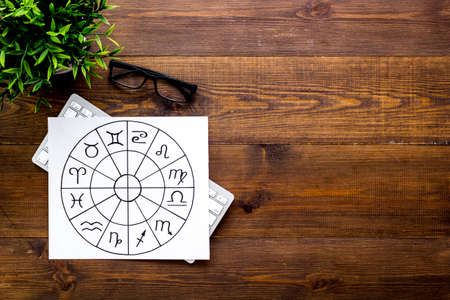
Introduction: Celestial Forces Over Westminster
The British Isles have long been a land where tradition and the unexpected walk arm in arm—nowhere is this more apparent than within the hallowed halls of Westminster. Here, amidst the echoes of Parliamentary debate and the subtle clink of tea cups, another force has always lingered just out of sight: the ancient influence of the stars themselves. As we embark on this exploration, “Horoscopes by Sign: British Politics and the Stars,” we invite you to consider how astrology, both whispered about in private members’ clubs and jested over at the dispatch box, subtly weaves its way into the very fabric of British political culture. This series will lay bare the whimsical yet surprisingly incisive intersections between planetary alignments and parliamentary proceedings, blending celestial insight with a wry nod to the uniquely British manner of public life. Whether you are a sceptic or a stargazer, prepare for a journey where cosmic patterns illuminate the corridors of power, offering fresh perspective on the familiar rituals and personalities that define our nation’s governance.
Aries to Pisces: Political Archetypes in the Zodiac
In the grand theatre of Westminster, each star sign finds its counterpart among Britain’s political dramatis personae. Here is a sign-by-sign breakdown, weaving together the ancient characteristics of the zodiac with archetypal roles familiar to any observer of UK public life:
Zodiac Sign |
Traditional Traits |
UK Political Archetype |
|---|---|---|
| Aries | Bold, pioneering, assertive | The passionate backbencher—leading rebellions and stirring debates with headstrong flair |
| Taurus | Steadfast, practical, reliable | The unflappable civil servant—quietly ensuring the machinery of government runs without fuss |
| Gemini | Adaptable, witty, communicative | The media-savvy spin doctor—crafting narratives and navigating Prime Minister’s Questions with quicksilver skill |
| Cancer | Nurturing, protective, intuitive | The constituency champion—fiercely loyal to local causes and community well-being |
| Leo | Dramatic, charismatic, authoritative | The orator at the dispatch box—commanding attention with Churchillian aplomb |
| Virgo | Analytical, meticulous, diligent | The policy drafter—pouring over white papers and scrutinising every clause with forensic care |
| Libra | Diplomatic, fair-minded, sociable | The cross-party broker—building bridges across aisles and leading Select Committees with poise |
| Scorpio | Strategic, intense, resourceful | The whip’s right hand—mastermind behind closed doors and keeper of party secrets |
| Sagittarius | Optimistic, adventurous, philosophical | The international envoy—championing Britain abroad with gusto and open-minded vision |
| Capricorn | Disciplined, pragmatic, ambitious | The Cabinet stalwart—climbing the political ladder through sheer tenacity and sound judgement |
| Aquarius | Innovative, independent, humanitarian | The reformer—proposing radical bills and envisioning a progressive future for Parliament Square and beyond |
| Pisces | Empathetic, imaginative, wise | The conscience of the Commons—raising voices for the vulnerable and lending poetry to policy debate |
This celestial cast of characters animates British politics in ways both ancient and utterly contemporary. Whether you find yourself a bullish Aries or a contemplative Pisces, your cosmic signature may well echo down the corridors of power.
3. Planets on the Parliamentary Stage
Astrology often weaves its influence subtly through the corridors of Westminster, with planetary movements such as Mercury retrograde and Saturn return finding curious resonance in the ebb and flow of British political life. Mercury retrograde, that celestial byword for communication mishaps, has coincided with several notable parliamentary debacles—be it misjudged statements or botched negotiations. Observers may recall the infamous Brexit vote delays and heated Commons debates occurring under Mercury’s mischievous spell, where clarity was clouded and tempers frayed.
Saturn, the planet of discipline and reckoning, casts a sterner shadow. Its return, marking roughly a 29-year cycle, often heralds periods of reflection and structural change. In recent British history, Saturn’s passage has aligned with transformative junctures: from the rise of New Labour in the late 1990s to the seismic shifts post-2016 referendum. Each Saturnian phase invites both politicians and populace to confront hard truths, rebuild institutions, and redefine national purpose amidst uncertainty.
This astrological lens does not claim causality but offers a poetic symmetry between the heavens above and the House below. In a nation steeped in tradition yet ever attuned to change, planetary cycles provide an alternative compass—a means for analysts and armchair astrologers alike to interpret the tides shaping Britain’s political fate.
4. Manifestos Written in the Stars
Imagine, for a moment, a Britain where political manifestos are no longer the dry product of policy wonks and number crunchers, but instead, are lovingly crafted with guidance from the zodiac. Instead of focus groups in Swindon or pollsters on the phone, party leaders would consult star charts and planetary alignments before drafting their pledges. The results? A Parliament more attuned to Mercury retrograde than the Monday news cycle.
Astrological Party Manifestos: A Comparative Table
| Party | Astrological Influence | Star-Guided Policy Promise |
|---|---|---|
| Conservative | Capricorn (Saturn’s discipline) | “Austerity with Ambition”: Fiscal policies aligned with Saturn’s cycles—tax breaks only during favourable conjunctions. |
| Labour | Aquarius (Uranus’ revolution) | “Universal Basic Stardust”: Welfare reform based on lunar phases, ensuring benefits rise at every New Moon. |
| Liberal Democrats | Libra (Venusian balance) | “Coalition of Harmony”: Proportional representation dictated by planetary harmony, not parliamentary arithmetic. |
| Green Party | Pisces (Neptune’s empathy) | “Eco-Conscious Ascendant”: Climate action plans strictly timed to Neptune’s transit through water signs. |
| SNP | Aries (Martian courage) | “Independence Rising”: Referendums scheduled exclusively under Aries Full Moons for maximum boldness. |
The Zodiac’s Take on Political Spin
If astrological wisdom replaced spin doctors, British politics might take on an altogether more poetic—if occasionally chaotic—character. Imagine Prime Minister’s Questions determined by which sign the Moon occupies: a Cancerian PM would favour tea and sympathy, while a Leo leader might demand applause before every answer. The Budget would be delivered only when Jupiter is ascendant, and election night would be scheduled to coincide with Venus going direct—ensuring love (or at least affection) for democracy.
Manifestos as Celestial Contracts
No more broken promises; instead, manifestos would be binding as long as Mars remains in retrograde. Party whips would consult astrologers before any crucial vote, and manifestos themselves would be published in broadsheets alongside daily horoscopes—allowing citizens to check whether their sign is in for a windfall or a new round of council tax hikes.
A New Dawn—or Just More Starry-Eyed Promises?
This celestial approach might not deliver more pragmatic governance, but it could certainly make British politics infinitely more entertaining—and perhaps, just perhaps, encourage a touch more cosmic humility among those who claim to know what’s best for us all.
5. Stiff Upper Lip: The British Response to Cosmic Chaos
Amid the swirling constellations and planetary retrogrades, few societies have perfected the art of calm amidst chaos quite like the British. The time-honoured tradition of maintaining a “stiff upper lip”—that stoic composure in the face of adversity—has become not only a national hallmark but a cultural defence mechanism. When political turmoil mirrors Mercury in retrograde, Britons tend to meet celestial mischief with an arched eyebrow and a wry quip over a cup of tea. In this context, astrology slips seamlessly into public discourse, less as a map for destiny and more as a playful tool for social commentary. The British are masters at using wit to diffuse tension; thus, horoscopes become both satire and salve, offering light-hearted relief from the gravitas of parliamentary debates or the unpredictability of Downing Street. Whether reading one’s star sign in the morning paper or exchanging astrological banter in the local pub, there is an unspoken understanding: cosmic chaos may reign above, but here below, poise and humour prevail. In this way, the stars provide a mirror—not just to personal fate but to the indomitable British spirit itself.
6. Conclusion: Star Charts as Election Forecasts?
As we draw the celestial curtain on our exploration of British politics through the lens of horoscopes, it is only fitting to pause for a measured reflection. The idea of interpreting the nation’s political fate through star charts, planetary alignments, and zodiacal archetypes may strike some as whimsical folly, yet for others it offers a captivating alternative to the dry arithmetic of polls and punditry. In the grand tradition of British eccentricity, there has always been room for both serious debate and light-hearted speculation in public discourse.
To conflate astrology with political forecasting is, admittedly, to tread a fine line between metaphor and mischief. While no rational observer would wager the keys to Number 10 on Mercury’s retrograde or Venus trine Saturn, there is something deeply embedded in the British psyche that relishes the marriage of ancient mystique with contemporary affairs. Perhaps it is the enduring appeal of satire and irony—a national pastime—or perhaps it is an earnest yearning for order amidst chaos; a way to make sense of Westminster’s unpredictable theatre using the timeless logic of the heavens.
Yet, as any seasoned analyst knows, horoscopes offer more than mere entertainment. They serve as mirrors for our hopes, anxieties, and collective imagination. By casting politicians and parties as cosmic characters—fiery Aries leaders, diplomatic Libras, stoic Capricorns—we project onto them narratives that both illuminate and obscure. This creative exercise can foster fresh insights or simply provide much-needed comic relief in times when political reality strains credulity.
In conclusion, while star charts are unlikely to replace statistical models or rigorous debate in forecasting elections, their presence in the British public imagination should not be dismissed out of hand. They remind us that politics is not solely the domain of cold calculation but also of myth-making, symbolism, and shared stories—qualities at which Britons have long excelled. As the stars wheel overhead and ballots are cast below, perhaps there is value in embracing a little cosmic curiosity alongside our customary scepticism.